

My name is Bob
Jenkins and I am the
Webster county coordinator.
We have
many genealogical resources available here.
We
would appreciate any contributions you would like to
make to this site.
Types of materials we are looking to
include on this website are:
family histories, biographies, photos,
obituaries, tombstone photos
& inscriptions, cemetery lists, etc.
If you have any the above items please
contact me by clicking on my name.
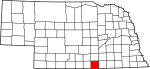
Webster County, Nebraska
Webster County was established in 1871, carved from the rolling prairie along the Republican River as homesteaders pushed westward into south‑central Nebraska. Webster County was named after the statesman Daniel Webster. Daniel Webster was an American politician who represented New Hampshire (1813–1817) and Massachusetts (1823–1827) in the United States House of Representatives; served as a Senator from Massachusetts (1827–1841, 1845–1850); and was the United States Secretary of State under Presidents William Henry Harrison (1841), John Tyler (1841–1843), and Millard Fillmore.
Early settlers—many arriving from the Midwest, New England, and later from German, Bohemian, and Scandinavian communities—built small farming towns that anchored the county’s growth.
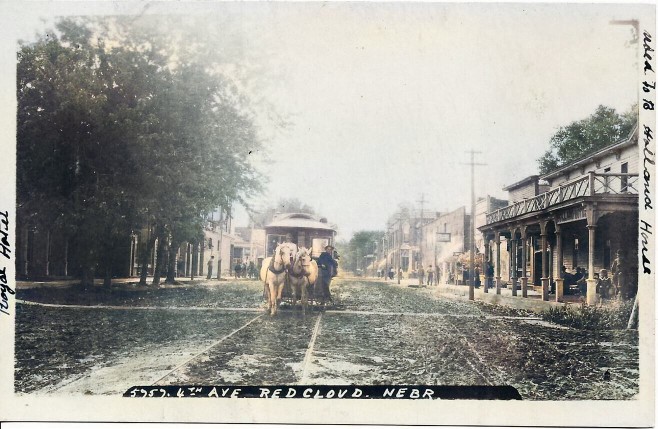
The arrival of the Burlington & Missouri River Railroad in the 1870s accelerated settlement, shaping communities such as Red Cloud, Blue Hill, Bladen, and Guide Rock. Red Cloud, the county seat, became nationally known as the childhood home of author Willa Cather, whose writings preserved the landscape and pioneer experiences familiar to many early families.
Agriculture remained the backbone of Webster County life, with generations working the fertile river valley and upland prairies. Churches, schools, and local newspapers documented the rhythms of rural life and now serve as valuable resources for genealogists tracing family lines.
Today, Webster County’s records—its homestead filings, cemetery listings, naturalization papers, and community histories—offer a rich window into the people who built the county from the 1870s onward. For researchers, it remains a place where family stories, pioneer resilience, and prairie heritage come together.