
Pioneers of Flagler County
Alvah A. Bunnell (1854-1944)
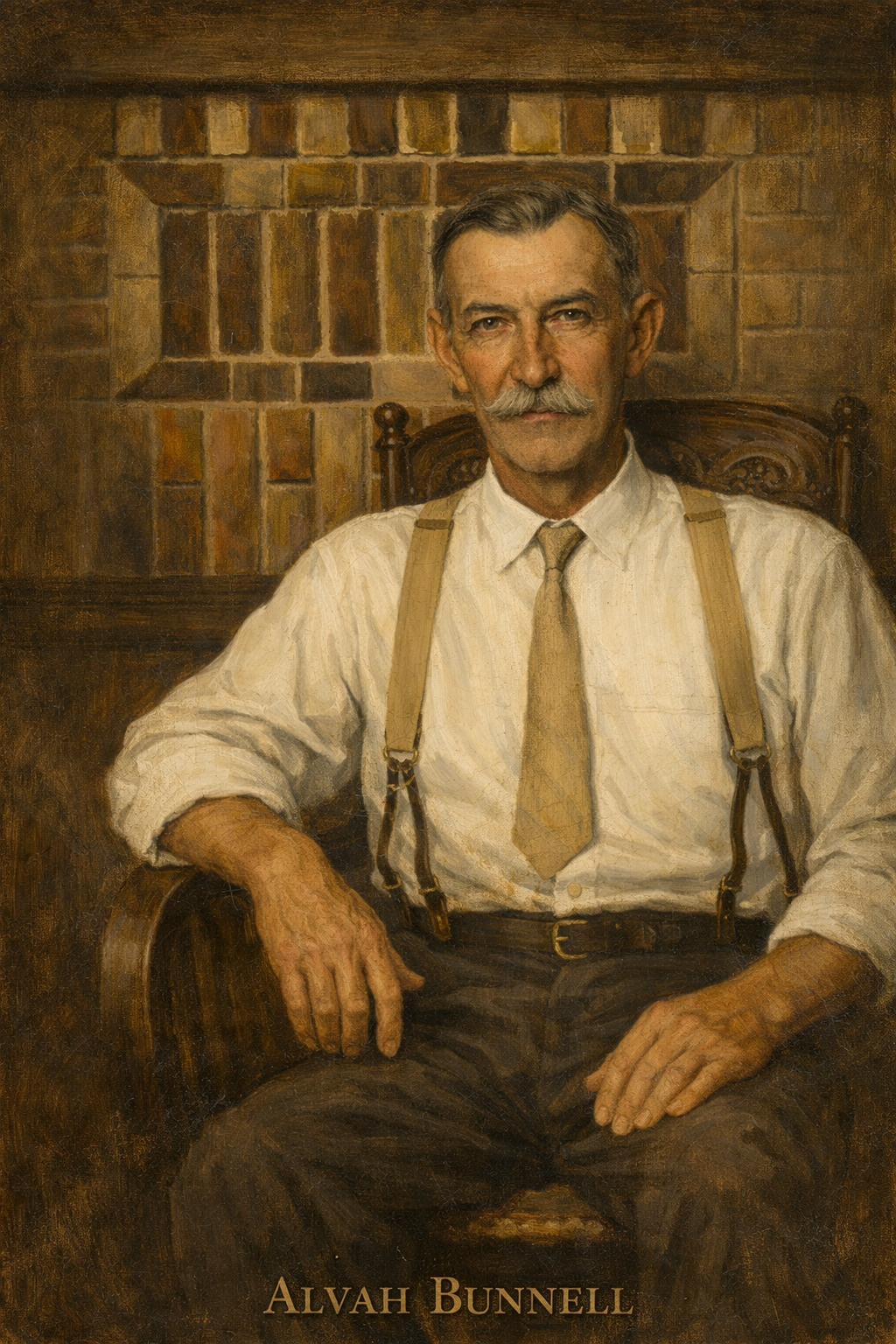
The inland city of Bunnell takes its name from Alvah Alonzo Bunnell, an early settler of the region who helped shape the community during its earliest years. Bunnell was born in 1854 in Columbia County, Florida, the son of Eli Bunnell and Mary Ann Phebe Caulder.
In Oct 1877, he married Susan Goodwin in Putnam County, Florida. By the late 1870s he had moved south with his family to the small settlement of Espanola, which was in St. Johns County at the time. There he established a homestead and farmed the land at a time when the area was still largely wilderness, dotted with turpentine camps and scattered homesteads.
As settlement slowly increased during the late nineteenth century, a community developed near the railroad stop that would eventually bear his name. In 1892 Bunnell was appointed postmaster, placing him in a key role in the young settlement’s daily life and communications. His wife Susan, a teacher, helped organize one of the area’s first schools as more families began settling near the depot and surrounding farms.
Bunnell also became involved in local business ventures, operating a sawmill and a general store that supplied residents of the growing community. In 1904 the mill was relocated and the store was sold to I. H. Hyden. Shortly afterward Bunnell moved with his wife and their ten children to Miami, where he spent the remainder of his life. He died there in 1944, though the town that grew from the small railroad settlement continued to carry his name.
Isaac "Ike" Moody (1874-1918)
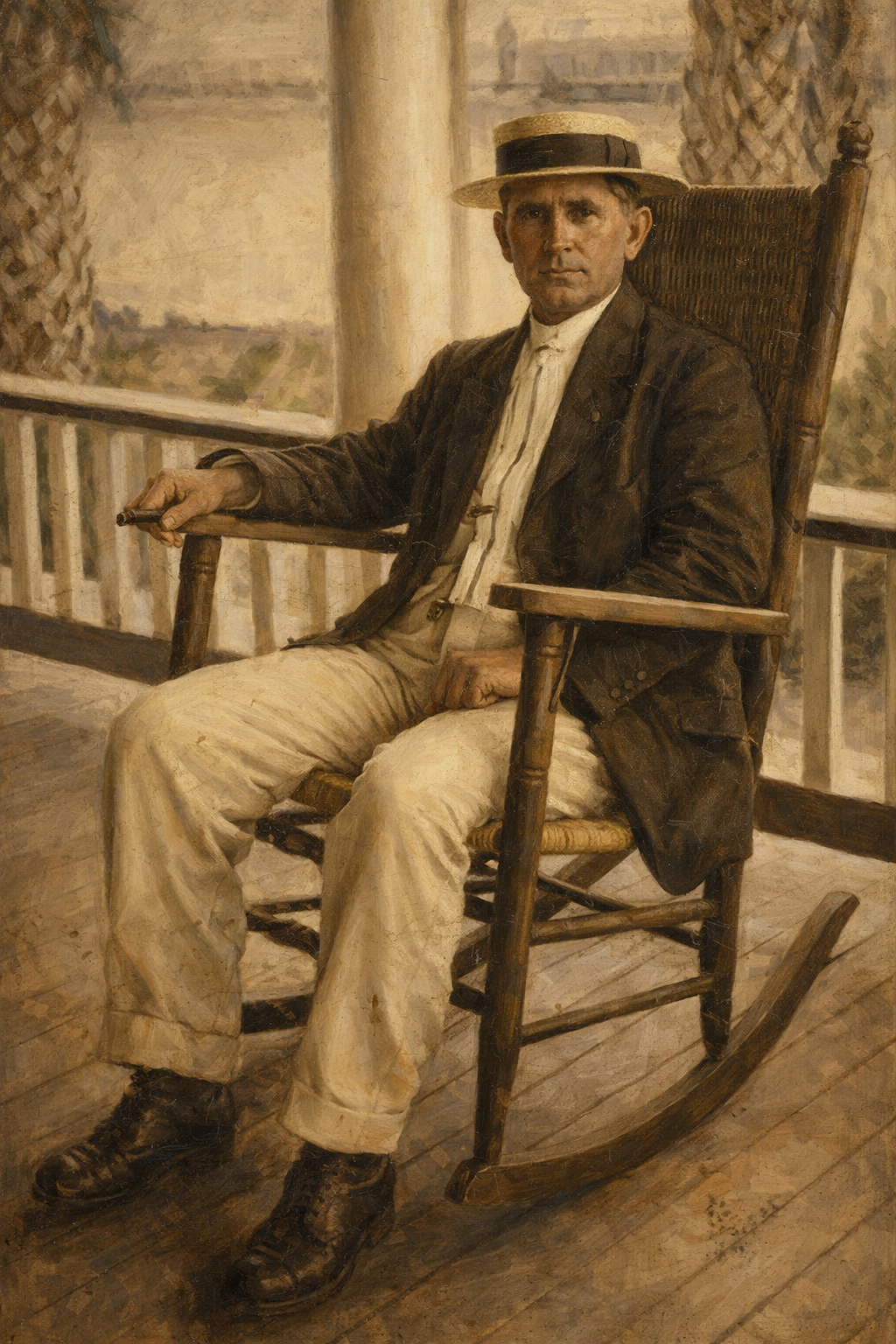
Moody was a businessman and political leader who played a central role in the development of Bunnell and the creation of Flagler County, Florida. Born in Appling County, Georgia, he moved to northeast Florida in the 1890s and worked in the turpentine industry before entering lumber, real estate, and banking ventures.
Through the Bunnell Development Company he helped lay out and promote the town of Bunnell, attracting settlers and agricultural development to the region. Moody later served as chairman of the St. Johns County Board of County Commissioners and led the effort that resulted in the creation of Flagler County in 1917.
Moody was also closely associated with the naming of the new county. When residents of the Bunnell and Dupont area sought to create a separate county from portions of St. Johns and Volusia counties, Moody helped lead the movement in the Florida Legislature. During the discussions over the proposed county’s name, he suggested honoring railroad developer Henry Morrison Flagler, whose Florida East Coast Railway had opened the region to settlement and commerce. The name Flagler County was adopted when the county was formally created in 1917.
He was elected the new county’s representative to the Florida Legislature in 1918. While attending a legislative session in Tallahassee during the influenza pandemic, Moody contracted the illness and died after returning home to Bunnell on 17 Dec 1918 at the age of forty-four.
Contemporary accounts described him as one of the most influential citizens of the region and credited him with attracting new settlers and investment to the Bunnell area. His funeral was widely attended, and newspapers noted that he left a wife and three daughters—Gladys, Leona, and Dorothy—as well as numerous relatives and friends who mourned his passing. Though his life was cut short at the age of forty-four, Moody’s work in promoting settlement and helping establish Flagler County left a lasting mark on the community.
Raiford Valentine PRIEST (1893-1985)
Raiford Valentine Priest was born in Bunnell, Florida, in 1893. In 1907 his family moved to Linton, the community later renamed Delray Beach, where he lived for the remainder of his life until his death in 1985.
His parents were Joseph Lark Priest and Martha Jane Malphurs. They were married in St. Johns County, Florida, in 1888. Joseph Lark Priest had moved to Hamilton County, Florida, with his family in 1866. Martha Jane Malphurs was the great-granddaughter of John Hall Malphurs.
Martha Jane’s mother, Rutha Davis, was the daughter of George Washington Davis and Jan Davis, who were living in Madison County, Florida, during the 1850s.
Raiford “Ray” Priest worked as a farmer and later operated a gas station. He also served with the Delray Beach police department and eventually became Chief of Police. He was widely regarded as a respected and well-liked member of the community.
Utley James White (1847-1917)
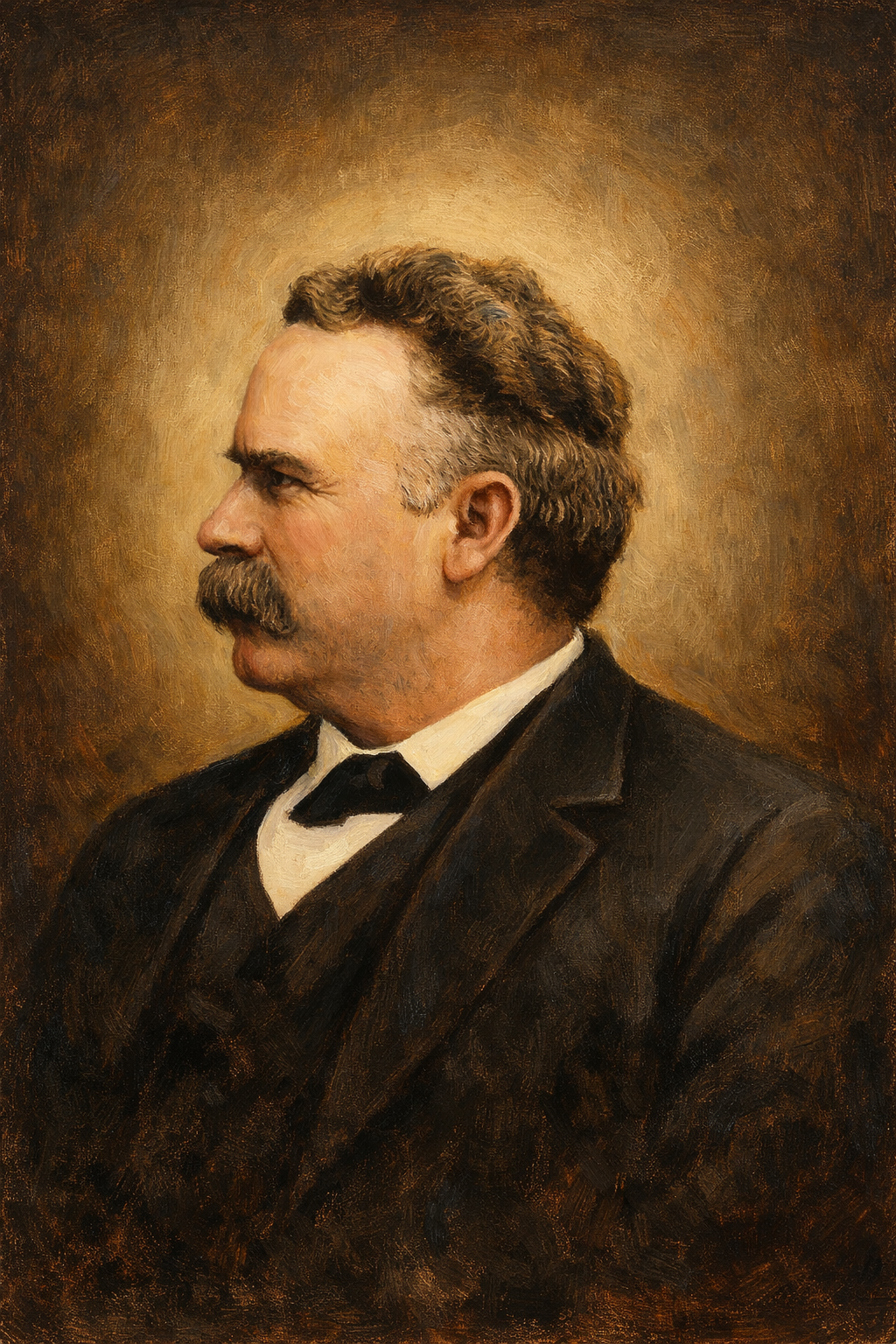
White was a lumberman, railroad builder, and agricultural developer whose activities helped shape the interior region of St. Johns County and the area that later became Flagler County. White moved to Florida in 1872 and worked briefly with the San Sebastian Railroad, where he served as master of transportation, managing teams of horses and mules used to haul rail cars before the line converted to locomotive power.
In December 1881 White organized the St. Johns & Halifax Railway with investors William B. Barnett and Sidney I. Wailes. White oversaw construction of the early line and served as the local manager of the railroad and associated farmland developments in southwest St. Johns County. During the mid-1880s he sold his interest in the railroad business, which was later reorganized as the St. Johns & Halifax River Railway and eventually incorporated into the expanding rail network associated with Henry Flagler.
White’s later career centered on land, timber, and agriculture. After acquiring large holdings near Hastings he developed a rice plantation of about 350 acres. Following the sale of much of his Hastings property, White purchased roughly 32,000 acres in the Haw Creek region. There he established major lumber operations at Dupont, constructing about eighteen miles of timber railroad to supply cypress and pine mills that harvested forests across St. Johns and Volusia counties. By the early twentieth century White controlled extensive timber, milling, and agricultural enterprises and was considered one of the larger landowners in the region.
In July 1911 he sold approximately 35,000 acres in the Haw Creek and Dupont region for more than $500,000, including his sawmill and turpentine interests. He later developed a large residence at Lighthouse Park on Anastasia Island, then a fashionable resort area near St. Augustine. White spent his final years in St. Johns County and died on 20 Feb 1917, leaving behind a legacy tied to the timber, railroad, and agricultural development of northeast Florida.