

My
name is Bob
Jenkins and I am the Grand Isle County Coordinator.
We have many genealogical resources available here.
We would appreciate any
contributions you would like to make to this site.
Grand
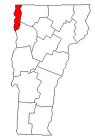
Isle County, Vermont
Grand Isle County, Vermont—set amid the islands of northern Lake Champlain—has a history shaped by water, migration, and resilient New England communities. Originally home to the Abenaki people, the islands later drew French explorers in the 1600s and became part of the contested borderlands between New France, the Province of New York, and the emerging Vermont Republic.
Permanent Euro‑American settlement began in the late 1700s, when families from southern New England and upstate New York established farms on the fertile lake plains. By 1802, Grand Isle County was officially formed, encompassing the towns of Alburgh, Grand Isle, Isle La Motte, North Hero, and South Hero. Agriculture—especially sheep, dairy, and orchard crops—anchored the early economy, while the lake provided transportation routes, fishing grounds, and later steamboat connections.
Throughout the 19th century, the islands saw steady but modest population growth. Many families appear repeatedly in land records, town clerk volumes, church registers, and cemetery inscriptions, creating rich genealogical trails. Isle La Motte’s quarries, Alburgh’s rail connections, and the county’s numerous small villages brought waves of newcomers, including French‑Canadian migrants who crossed the lake seeking farmland and mill work.
By the 20th century, Grand Isle County remained Vermont’s smallest and most rural county, known for tight‑knit communities, lakefront farms, and multigenerational family lines. Today, its town records, cemeteries, historic churches, and long‑preserved land parcels offer exceptional resources for tracing ancestors who lived along the shores and islands of Lake Champlain.