|
Founded 1903 |
|
|
|
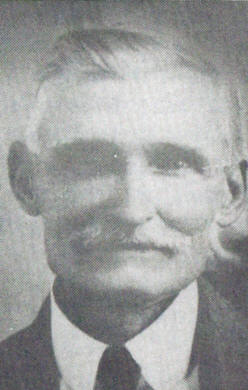
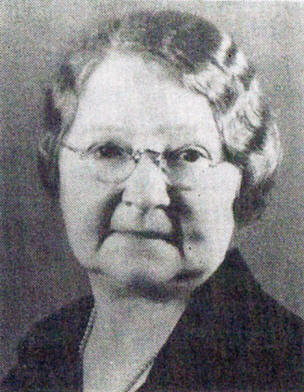
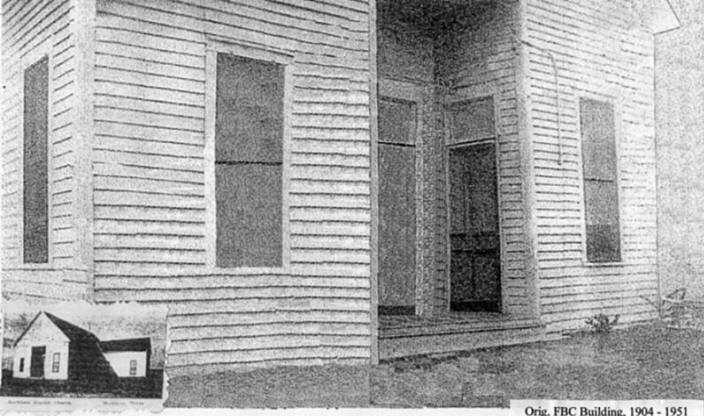
Worship in Matagorda County, Texas According to the award-winning book Historic Matagorda County, the first Baptist Sunday School in the Republic of Texas was started at Matagorda in 1830. Soon there were Baptist churches also in Old Caney and Tres Palacios. Being so near the Gulf Coast makes Matagorda County often a target for storms. All denominations in Matagorda were left without a meeting place from a terribly destructive hurricane in 1858. A statement that was published in the Matagorda Gazette newspaper of that time regarding a place of worship: “There are in Matagorda a few Baptists, a small Episcopal Methodist Church, a small Christian Church, etc. – all equally destitute of a house of worship and we presume none of them are willing to admit any intellectual or moral inferiority to their fellow-workers in that place…(omission)….we do think, that when a house of worship is to be erected by public contributions, publicly solicited, that a generous, liberal-minded community would not wish to monopolize by any one small sect in our town, with the exclusion of all others…(omission)…. Of course, this arrangement would impose no obstacle in the way of any sect building for themselves when able.” <Wm. Baxter, Elder of the Christian Church, Matagorda> After Texas became a state, and according to the Bay City FBC history, the communities of Ashby on Wilson Creek and Red Bluff on the Colorado River had built joint places of worship by 1869. Circuit-riding preachers of several different denominations shared God’s word in the rural areas. Rural “Circuit-Riding” PreachersHistorical records declare that these churches from small communities were the “parent” of most of the larger congregations formed in other local town sites. Reverend Robert Abner Partain was the first Pastor of Red Bluff’s Colorado Baptist Church of Christ, after having been an Elder at the former Tres Palacios Baptist Church at Demings Bridge, (May, 1892 minutes). The name of this location was changed to Hawley and the buildings have been moved either to Midfield or Blessing; only a cemetery remains. When Bay City became the Matagorda County Seat in September of 1894, Rev. Partain and his congregation moved into town and established the First Baptist Church of Bay City. Church records show Rev. J. H. Thorn as their pastor in 1904, then Rev. Eli F. McDonald of Yoakum, who is also listed in the Markham Baptist Church pulpit Bible as pastor in 1905. It is likely that both these men were circuit, quarter, or half-time preachers in Markham on Sunday afternoons when we had our beginning. Founding of MarkhamFrom the activities of the Moore and Cortes Canal Company, a hotel and Post Office had been established at Cortes, Texas, near Elliot’s Ferry crossing at the Colorado River. By 1902, rhe New York, Texas, and Mexico Railroad had crossed the river toward Palacios, choosing several loading depots through the area along the way. Soon after, a bridge was built across the Colorado River near Cortes to extend Highway 35 further south. On January 14, 1903, representatives of the Markham Town Company were deeded 344.6 acres (@ $50/acre) for the site of a proposed new town. Newspaper accounts give the official Markham founding date as May 23rd, 1903, the day an influential railroad official (C. H. Markham) placed his name on a boxcar at a side switch to mark the depot site. By mid-June, the land was plotted into streets, blocks and lots, and the area was dedicated to the public for purchase and settlement. Soon after, residents from Northern Canal Company Headquarters, Cortes, and surrounding areas began to relocate and populate the town of Markham, which is now one mile square and land-locked by ranches and farmland. Baptist Church Chartered, and Land Purchased Word-of-mouth tells us that Markham was little more than a “tent city” when Mrs. Captain James (Vina E.) Barnett and four other ladies chartered a Baptist Church in 1903, and started meeting upstairs over a saloon. (The other four, although not documented, may have been Mrs. E. F. McDonald, Mrs. Charles (Dora) Cabaniss, Mrs. W. R. Knowles and Mrs. Dock Mason.) A short history of the Markham Baptist Church (MBC) appears in the limited issue of Historic Matagorda County Vol. III. This commentary, submitted by Minnie Legg, tells that the owner of the saloon eventually became a Christian and closed his liquor business. A dramatization of one of these services was presented during the Centennial celebration by Burlon and Betsy Parson’s ‘Wharton Time Walkers”. On June 16, 1903, County deed records show that three Trustees of the newly organized Baptist Church (S. J. Hill, I. A. Hodges, and G. H. Morrow) purchased Lot 12 of Block 57 @ Canal and Avenue J, for $1.00 in cash! In 1904, the Baptists built a one-room church for the growing community.
In November of the founding year, Pilgrim Rest Baptist Church was also chartered in Markham. Their original building was lost in 1962 due to Hurricane Carla. The Ashby Memorial Church building was relocated to Avenue B and Ninth Street in exchange for that congregation fencing in the Ashby Cemetery. Pilgrim Rest has a Texas Historical Subject Marker. The United Methodist Church (UMC) of Markham was organized by March of 1904, but met for services with the Baptists for about 20 years before building a separate sanctuary. Complete records of the early Markham Baptist Church are not available; however, a congregation was already chartered and Trustees were selected by the time lots were available for purchase! Much of this history is from a Deed and Title search, along with several commentaries, newspaper articles, and participating residents’ memory. Early Markham residents left a legacy of faithfulness and perseverance that has lasted for over a century. Buildings and GroundsThe same Trustees who had originally purchased the lot for Markham Baptist Church, signed a mechanics lien for $850.00 with Alamo Lumber Company on December 9, 1904. This was probably the date charter members began construction of the original one-room church building on the southeast corner of Canal Street and Avenue J. Our little one-room building was considered a “community” church, consisting largely of Baptists and Methodists. However, W. D. Cornelius, Jr., testifies that he and his family also attended the church on Canal and Avenue J. when the roads were too muddy to travel. They were members of the Catholic Church in Bay City. Minnie Legg wrote that a tornado lifted the one-room Markham Baptist Church up and set it down in the middle of the street in 1905. The building had very little damage, so with cooperation and borrowed money, the building was moved back to its rightful place. The Colorado Baptist Association assumed the MBC debt and Title of Lot 12 of Block 57 on January 18, 1906. In 1924, after five years of fund-raising, Pastor Crail and the Markham United Methodist membership completed a separate church building that stands and remains active at Broadway and 7th Street. From this time on, MBC was no longer considered a ‘community’ church. In the 1930-1940’s timeframe, during Rev. R. E. Black’s 16-year Pastorate, a kitchen and attic classrooms were added to MBC, and a piano donated by the Doman family was hoisted up through an upper window opening! Senior citizens advised that school children met in the original church for classes before the first (frame) Markham School was erected. We are grateful to the Association for conveying the cleared deed without cost on April 17, 1951. This enabled the FBC to build the second frame sanctuary the following year.
Services were held at the school until construction was complete, largely through volunteer work and funding by Vergil and Velmo McGinnis, Vic Burchfield, Belton Snider, Morris Duplissy, Ed Hess, Wilbert Canant, Luther Robertson, and J. C. Keith. Folding theater seating was purchased from a church in Beaumont, Texas, for the new sanctuary. New Gulf Pastor, Rev. C. H. Phieffer painted and donated a removable river scene for the baptistery. Just before services were to begin in the new frame sanctuary, Pastor, Rev. Allen Oubre led the Church to prepare an affidavit declaring that the Markham Baptist Church and the First Baptist Church were legally the same. Tom Damuth and sons, along with other congregants built a brick Educational Building in 1961. This building was enlarged in 1977, and combined with a new air-conditioned brick sanctuary during the sixteen-year pastorate of Rev. Joe E. Ramsey. The Baptistry painting was lovingly salvaged and reinstalled by Jack Cornman and Cecil and Minnie Legg into the present brick sanctuary. The previous frame sanctuary was bought by L. C. and Irene Rush. The back portion was moved and remodeled into a beautiful 2-story Swiss Chalet for their home on Avenue F, while the remaining part was torn down and materials used for their camp house in Charanqua. Around 1986, a sizeable donation was given to FBC in memory of Carlton LeBeff. Pastor Howard Harper and the church voted to use these funds to build a Christian Life Center (CLC) with a gymnasium for our youth and large gatherings. Because he was especially active in encouraging youth and missions work, the church chose to memorialize his efforts by naming the CLC after Brother Harper. More of Harper’s work will appear in the “Missions and Outreach” section of this history. Sadly, he was killed in July of 2022 in an auto accident. Today, several oak trees, a Jack Cornman memorial circle drive and an Earsie {Hale) Midgett memorial prayer bench grace the front yard. Baptists and Methodists CooperateMinisters were scarce and funds were meager, but whether preachers were sent, called or borrowed, the Baptist Church in Markham never closed its doors. Historical writings mention that struggling congregations which lacked a designated pastor would welcome part-time pastors from larger area churches and various denominational student preachers from the Palacios Baptist College of South Texas or the University of Corpus Christi. The Baptist College closed when so many young men entered WWI in 1917, and the facility became a home for aged ministers until funds dried up. During revivals, either the Baptist or the Methodist church would dismiss their Sunday night services to attend and support the other. The Baptist Church minutes include an approved dismissal of our services to allow members to attend the wedding of Kaleta Jessie, when she became Mrs. Conlee in March of 1942. When Mrs. Doman was the Methodist Church pianist, she would rush over and play for the Baptist services, too! For many years, Mrs. Doman and her daughter, Mignon, provided floral arrangements for both the Baptist and Methodist churches. This cooperative effort signifies God’s intended relationship among His people, pleading “Give Me That Old Time Religion”. When funds became available, each congregation supplied a parsonage for their respective pastors and cooperated with each other in every way possible. Baptist minutes show that the Methodist congregation agreed to help with the light bills and they worked jointly in fund-raisers. At an MBC business meeting, Mrs. J. H. Barber of the Markham United Methodist Church obtained permission, and taught a Sunday School class at the Baptist Church from 1908 to 1925. Other Methodists also were officers and teachers while we met jointly. Earsie (Hale) Midgett told us that, while growing up, she and the other Methodist youth joyfully participated in the Baptist Young People’s Union. A July, 1904, issue of the Daily Tribune made notice of the “Union Camp Meeting at Hawley”. Missions and Outreach Methodist, Annie Sparks remembered attending worship services for many years in the Clemville School before L. P. Larson made the land available and a church building was donated around 1924. Brother Crouch, of the Colorado Baptist Association, Rev. Black and Markham Baptist Church joined Brother Snow and the existing Methodist ministry at Clemville Community Church around 1947. Students and ministers of various denominations continued to supply the pulpit at Clemville Community Church until the congregation disbanded, around the mid-eighties. In 1944, MBC Pastor, Rev. Black and a ministry team began holding afternoon Mission Church services at the Ashby School. Brother Black became the Pastor of Ashby Memorial Baptist Church after his retirement from Markham Baptist\in June of 1946. Brother Black organized the first Brotherhood in the Colorado Association at Markham FBC in 1936. During financially slack and pastorless times, the Women’s Missionary Union (or Society) is credited with the continuance of the Baptist fellowship in Markham. When the original Blessing Baptist Church disbanded on January 15, 1928, the T. B. Smiths and the E. R. Bell family moved their membership to Markham. Mrs. T. B. Smith (Irma) helped to write the history of the Markham Baptist Church WMU for the national organization’s Diamond Jubilee (75th year) celebration in September of 1955. She served and enjoyed the Markham WMU extensively until her health would no longer permit. Under Rev. Howard H. Harper’s leadership, FBC offered financial support for the Unity Mission during a period starting in 1988 with the licensing and ordination of Rev. Mitch Sauls. This congregation met in a house near the Tres Palacios River until offered the unoccupied 1st Baptist Church building at Collegeport in 1997. The distance wasn’t feasible for congregants, however, and the Church was disbanded. At the time of this writing, and since 2007, however, Brother Sauls has been Pastor of the Matagorda Community Baptist Church. Long-Term Pastorates Robert E. Black came right out of college in Alabama to teach English at Markham High School. He also accepted a bi-vocational ministry at Markham Baptist Church for $30.00/month and was ordained on October 6, 1930. In addition to teaching and preaching, Robert Black was very talented and successful as a barber, a musician, farmer, and a published poet. He gave MBC and the Lord 16 years of his busy life as Pastor. During the Great Depression, just keeping up with the bills was a struggle, but Rev. Black led the Baptists to expand and improve the existing church on Canal Street. The Markham congregation even hosted Associational fellowships and fed everyone at no cost. Mattie Snider remembered helping to cook at home, collecting and serving meals from that little kitchen for these huge gatherings. Before his retirement, Rev. Black held worship services both at Ashby and Wadsworth, simultaneously, and had a record of baptizing the largest number of Markham FBC converts at one time – in a nearby canal. Refer to subtitle “Missions and Outreach”. Rev. W. Jeff Clements first filled the MBC pulpit from July 26, 1946 until August 10, 1947. Records show the deacons at that time to have been C. O. Legg, Wayne K. Tomlinson, Archie Williams, R. L. Hammil, John Quinney, and Luther Robertson. On November 8, 1946, the church bought (for $3,750) the Alfred/Ina Hanson house, which was cleaned and repainted for the Clements family to move into. Additionally, lots 7-8-9-and 10, adjoining the church property was purchased to later locate a new parsonage. Following two other short-term pastorates, Bro. Clements returned to Markham First Baptist Church on December 1, 1951, for a monthly salary of $250.00 + $10.00 for utilities. In 1952, the Church paid $500.00 to acquire the west portion of Block 57 along Canal Street and completed the second, larger frame Sanctuary. In December of 1954, Deacon Cecil Legg began warming the building for services, and did so until he was no longer able. During the next four years, members replaced the water well and pump, and paid down the church debt. The Burchfields, Robertsons, Leggs, McElraths, Sniders, Clements, Damuths, and Brods, donated various pieces of furniture and kitchen appliances. Brother Clements’ two pastorates totaled 12 years and he was greatly loved when he resigned on August 19, 1956. Rev. Joe E. Ramsey Coming from Batson, Texas, Bro. Ramsey began a 16-year pastorate in Markham on March 3, 1970. His beginning salary was $375.00 a month. The new Mrs. Bernice Sanders Ramsey conscientiously served as church clerk for approximately 35 years, including the years Brother Joe pastored in Markham. Bro. Joe retired from the Markham FBC on October 1, 1986, but was elsewhere called back into the ministry two more times before actually “retiring”! He and his wife bought a home in Bay City, and became members in attendance at the Calvary Baptist Church of Bay City, following his last pastorate at Van Vleck FBC. Rev. Howard Harper Bro. Harper retired after 18 years and 2 months at FBC, Markham on June 12, 2005, as likely our most mission-minded pastor (see heading “Missions and Outreach). He led willing members on mission trips to Belize, C.A. and into Mexico in cooperation with Wm. Gartner, Pastor of the Big Bend Baptist Church. Bro. Harper had also rallied for the youth of the Markham community, offering his family’s ranch property for campouts and retreats. At the pastor’s request, we have often hired youth directors for the summer to keep the young people interested in coming to church During 1999, the membership voted to designate a sizeable donation given in memory of Carlton LeBeff for a Christian Life Center. The CLC and gymnasium have provided for additional ministries in a safe environment for Markham youth and families with small children. The facility was dedicated and named the Howard Harper Memorial Christian Life Center in his honor. Another priority to Brother Harper was having a regular Hispanic ministry to the approximately 40% Hispanic residents of Markham. .Belle Castaneda taught a Spanish-speaking Sunday School class for about five years, and Howard Harper sponsored two bi-lingual revivals, one led by Evangelist Mickey Munoz, and a second by Dr. Rudy Hernandez of Dallas. The church also licensed Tino Torres to preach for one of our Mexico Mission trips. Howard Harper and his wife, Shirley, bought their own home in 1997. During his pastorate, the church parsonage was utilized for Sunday school classes, Vacation Bible School, housing for revival evangelists, etc. In 2003, use of the parsonage was part of the salary to employ Brent and Wendy Calhoun as full-time Youth Directors. Howard Harper participated in an after-school outreach called “SNACK Time”. We had as many as 60 kids attend, but keeping a sufficient number of volunteers was difficult after four+ years. After retiring from FBC, Markham and until his death, Brother Harper pastored at the Midfield Community Church and also the FBC at Matagorda, Texas. Rev. Damon H. Rambo There was no hesitancy when the search team told Damon Rambo how meager the salary was that we could offer, so we invited him to preach in view of a bi-vocational call. His tenure began on November 6, 2011, and continues as of this writing in his twelfth year. Brother Rambo came to FBC with a Master of Divinity from Liberty Baptist Theological Seminary, Virginia. He had 4 years pulpit experience as a lay preacher, youth director and a summer missionary, but Markham FBC was his first Sr. pastorate. He offers no frills or concessions, simply Biblical facts, and his sermons are enthusiastic and always interesting. Brother Damon is very evangelistic and civic-minded. He began serving on the board of the Palacios Baptist Encampment in 2022. He loves to do ‘street preaching’, and has led groups to witness in favor of life at the abortion clinic in Houston and at the Texas State Capitol. His concern for the decline of today’s culture even spurred him to run for State Representative of our area, though unsuccessfully. In addition to preaching, he leads the singing, does solos, and has personally installed a new A/C system and video system for on-line services from the sanctuary. He and family did most of the work in the Fellowship Hall to add a coffee bar, install a window into the foyer, paint, upgrade lighting, and then added a couch to create a welcoming feel of home. At his request, the Church voted to finance evangelists to witness in Lake Jackson during a Trans-Drag performance for kids in June, 2023. Joining several area Pastors and leaders, Brother Rambo went to the Dominican Republic on Mission Trips in 2023 and 2024, and is scheduled to go again in 2025. Conclusion
People are the basis of
a church, not the building where they meet. I once read the
following quote regarding the Materials of Construction for a Church
(author unknown): “There will be times a Church must be steel, and
other times it will have to be velvet. A Church that is all
steel is harsh and calculating. A Church that is all velvet
becomes too soft, too tolerant, accepting anything and lacking in
conviction.” Reference the books of Hebrews, Chapters 3:6,
Matthew, Chapters 15-18, and Revelation 1-3 for confirmation. |
|
|



|
Founded 1903 |
|
|
||||||||||||||||||||||||||||||||||||||||||||||||||||||||||||||||||||||||||||||||||||||||||||||||||||||||||||||||||||||||||||||||||||||||||||||||||||||||||||||||||||||||||||||||||||||||||||||||||||||||||||||||||||||||||||||||||||||||||||||||||||||||||||||||||||||||||||||||||||||||||||||||||||||||||||||||||||||||||||||||||||||||||||||||||||||||||||||||||||||||||||||||||||||||||||||||||
|
|
|
|||||||||||||||||||||||||||||||||||||||||||||||||||||||||||||||||||||||||||||||||||||||||||||||||||||||||||||||||||||||||||||||||||||||||||||||||||||||||||||||||||||||||||||||||||||||||||||||||||||||||||||||||||||||||||||||||||||||||||||||||||||||||||||||||||||||||||||||||||||||||||||||||||||||||||||||||||||||||||||||||||||||||||||||||||||||||||||||||||||||||||||||||||||||||||||||||
|
Courtesy of Betty Quinney |
||||||||||||||||||||||||||||||||||||||||||||||||||||||||||||||||||||||||||||||||||||||||||||||||||||||||||||||||||||||||||||||||||||||||||||||||||||||||||||||||||||||||||||||||||||||||||||||||||||||||||||||||||||||||||||||||||||||||||||||||||||||||||||||||||||||||||||||||||||||||||||||||||||||||||||||||||||||||||||||||||||||||||||||||||||||||||||||||||||||||||||||||||||||||||||||||||
|
||||||||||||||||||||||||||||||||||||||||||||||||||||||||||||||||||||||||||||||||||||||||||||||||||||||||||||||||||||||||||||||||||||||||||||||||||||||||||||||||||||||||||||||||||||||||||||||||||||||||||||||||||||||||||||||||||||||||||||||||||||||||||||||||||||||||||||||||||||||||||||||||||||||||||||||||||||||||||||||||||||||||||||||||||||||||||||||||||||||||||||||||||||||||||||||||||